

How does an infant walker work?
An infant walker is a popular and useful device designed to assist babies in their early exploration of mobility. As a supplier of infant walkers, I have witnessed firsthand the significance of these products in a baby's development journey. In this blog, I will delve into how an infant walker works, its components, and the benefits it offers to both babies and parents.
Components of an Infant Walker
Before understanding how an infant walker works, it's essential to familiarize ourselves with its key components. An infant walker typically consists of the following parts:
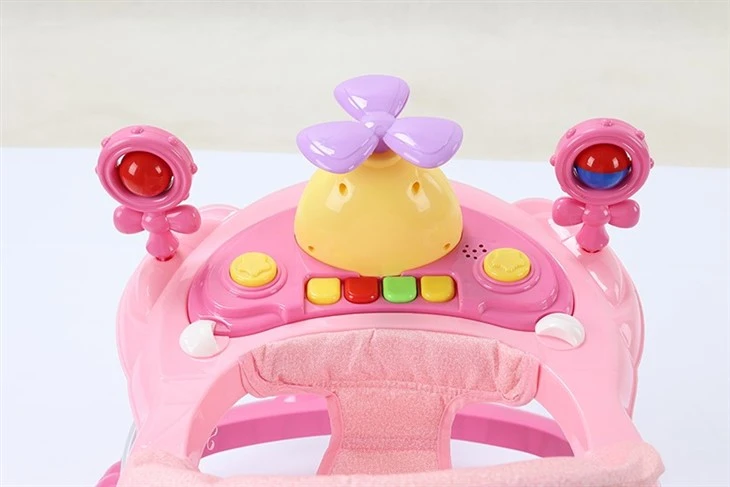
- Seat: The seat is the central part of the walker where the baby sits. It is usually padded for comfort and has a secure harness to keep the baby in place. The seat is designed to support the baby's body and allow for free movement of the legs.
- Frame: The frame provides the structure and support for the walker. It is made of sturdy materials such as plastic or metal and is designed to be stable and durable. The frame holds the seat and the wheels in place and ensures the safety of the baby.
- Wheels: The wheels are attached to the bottom of the frame and allow the walker to move around. Most infant walkers have four wheels, which are usually made of plastic or rubber. The wheels are designed to be smooth and easy to maneuver, allowing the baby to move forward, backward, and turn.
- Toy Tray: Many infant walkers come with a toy tray attached to the front of the seat. The toy tray is filled with various toys and activities that can keep the baby entertained while they are using the walker. The toys are designed to stimulate the baby's senses and encourage their cognitive development.
How an Infant Walker Works
Now that we know the components of an infant walker, let's take a closer look at how it works. When a baby is placed in an infant walker, their feet rest on the ground, and they are able to push themselves forward using their legs. The wheels on the walker allow the baby to move around freely, and the frame provides support and stability.
As the baby pushes themselves forward, the wheels on the walker rotate, allowing the baby to move in a straight line or turn. The baby can also use their legs to push themselves backward or to change direction. The toy tray on the front of the seat provides a source of entertainment for the baby, which can encourage them to use the walker and practice their walking skills.
One of the key features of an infant walker is its adjustable height. Most infant walkers come with adjustable legs or a height adjustment mechanism that allows the seat to be raised or lowered to accommodate the baby's height. This ensures that the baby's feet can rest comfortably on the ground and that they can use the walker safely and effectively.

Benefits of Using an Infant Walker
Using an infant walker can offer several benefits to both babies and parents. Here are some of the key benefits:
- Mobility Development: An infant walker can help babies develop their mobility skills by allowing them to move around independently. As babies use the walker, they learn to coordinate their leg movements and develop the strength and balance needed to walk.
- Sensory Stimulation: The toy tray on an infant walker is filled with various toys and activities that can stimulate the baby's senses. The toys can help the baby develop their visual, auditory, and tactile skills, which are essential for their cognitive development.
- Entertainment: An infant walker can provide a source of entertainment for babies, which can keep them occupied and happy. The toys on the toy tray can provide hours of fun and stimulation for the baby, allowing parents to have some time to themselves.
- Convenience: An infant walker can be a convenient tool for parents, as it allows them to keep their baby safe and entertained while they are busy with other tasks. The walker can be used indoors or outdoors, and it can be easily moved from one room to another.
Safety Considerations
While an infant walker can offer several benefits, it's important to use it safely to prevent accidents and injuries. Here are some safety considerations to keep in mind:
- Supervision: Always supervise your baby when they are using an infant walker. Never leave your baby unattended in the walker, as they could fall or tip over.
- Age and Weight Limit: Make sure your baby meets the age and weight requirements for the infant walker. Most infant walkers are designed for babies between 4 and 16 months old and weigh between 10 and 30 pounds.
- Floor Surface: Use the infant walker on a flat, smooth surface. Avoid using the walker on stairs, ramps, or uneven surfaces, as this could cause the baby to fall or tip over.
- Toy Tray: Check the toy tray regularly to make sure it is clean and free of small parts that could be a choking hazard. Remove any broken or damaged toys from the toy tray.
- Adjustable Height: Make sure the seat of the infant walker is adjusted to the correct height for your baby. The baby's feet should rest comfortably on the ground, and their knees should be bent at a comfortable angle.
Choosing the Right Infant Walker
When choosing an infant walker, there are several factors to consider. Here are some tips to help you choose the right walker for your baby:
- Safety Features: Look for an infant walker that has safety features such as a secure harness, adjustable height, and non-slip wheels. These features can help prevent accidents and injuries.
- Toy Tray: Choose an infant walker that has a toy tray filled with a variety of toys and activities. The toys should be age-appropriate and designed to stimulate the baby's senses.
- Adjustable Height: Make sure the infant walker has an adjustable height feature that allows you to raise or lower the seat to accommodate your baby's height.
- Size and Weight: Consider the size and weight of the infant walker. Make sure it is easy to move around and store, and that it is not too heavy for your baby to use.
- Brand and Reputation: Choose an infant walker from a reputable brand that has a good track record of safety and quality. You can read reviews and ratings from other parents to get an idea of the brand's reputation.
Conclusion
An infant walker is a useful and popular device that can help babies develop their mobility skills and provide a source of entertainment. As a supplier of infant walkers, I understand the importance of choosing the right walker for your baby and using it safely. By following the safety considerations and tips outlined in this blog, you can ensure that your baby has a safe and enjoyable experience using an infant walker.
If you are interested in purchasing an infant walker for your baby, please feel free to contact us for more information and to discuss your purchasing needs. We offer a wide range of high-quality infant walkers that are designed to meet the needs of both babies and parents.
References
- American Academy of Pediatrics. (2019). Infant Walkers. Retrieved from https://www.healthychildren.org/English/safety-prevention/at-home/Pages/Infant-Walkers.aspx
- Centers for Disease Control and Prevention. (2020). Preventing Infant Walker Injuries. Retrieved from https://www.cdc.gov/safechild/infant-walkers.html
- Mayo Clinic. (2021). Infant Walkers: Are They Safe? Retrieved from https://www.mayoclinic.org/healthy-lifestyle/infant-and-toddler-health/expert-answers/infant-walkers/faq-20058173