

What materials are infant walkers usually made of?
Infant walkers are essential products for many parents, providing a safe and enjoyable way for babies to develop their motor skills and explore their surroundings. As a leading supplier of infant walkers, I am often asked about the materials used in their construction. In this blog post, I will delve into the common materials found in infant walkers, their properties, and the reasons behind their selection.
Plastic
Plastic is one of the most widely used materials in infant walkers due to its versatility, durability, and cost - effectiveness. High - density polyethylene (HDPE) and polypropylene (PP) are two types of plastics commonly employed.
HDPE is known for its strength and resistance to impact. It can withstand the rough handling that often comes with an active baby using the walker. This plastic is also resistant to moisture, which is crucial as baby walkers may be exposed to spills and cleaning. Many parts of the walker's frame, such as the base and the side rails, are made of HDPE. It provides a sturdy structure that can support the weight of the baby and the movements during use.
Polypropylene, on the other hand, is lightweight and flexible. It is used for components like the seat padding covers and some of the smaller, more intricate parts of the walker. PP is also easy to mold into different shapes, allowing for the creation of comfortable and ergonomic designs. For example, the shape of the seat can be carefully crafted to provide proper support for the baby's back and bottom.
The use of plastic in infant walkers also allows for a wide range of colors and designs. This is important not only for aesthetic reasons but also for attracting the attention of both parents and babies. Brightly colored walkers can stimulate a baby's visual development.
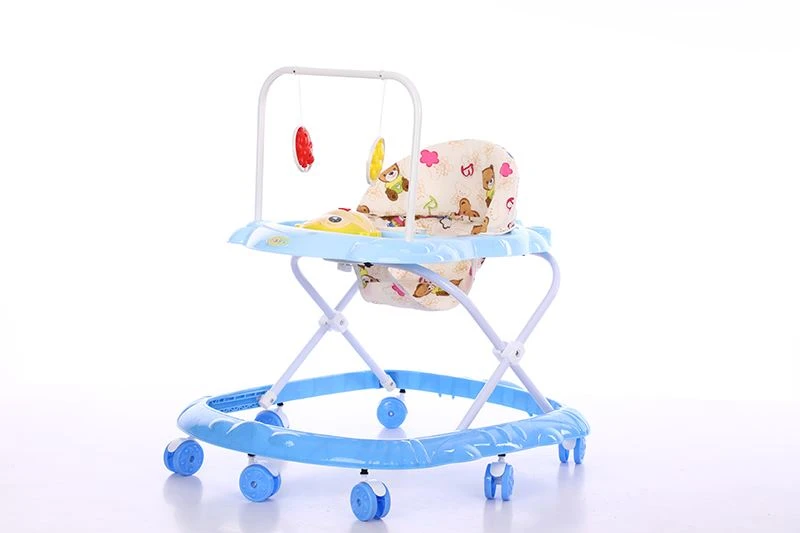
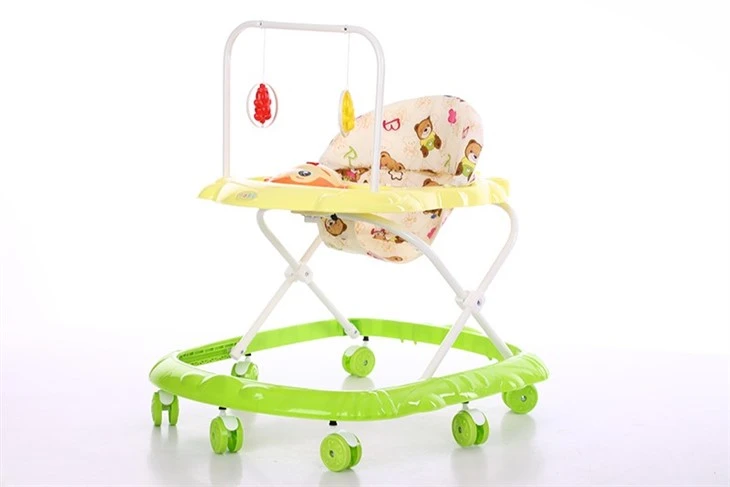
Metal
Metal is another key material in infant walkers, mainly used for the frame and wheels. Steel is a popular choice for the frame due to its high strength - to - weight ratio. A steel frame provides the necessary stability to prevent the walker from tipping over, especially when the baby is moving around vigorously. It can also support the weight of the baby and the additional weight of any toys or attachments that may be added to the walker.
The wheels of an infant walker are often made of metal or have metal components. Metal axles ensure smooth rotation, allowing the walker to move easily across different surfaces. Some high - end infant walkers may use stainless steel for the wheels and axles, which offers excellent corrosion resistance. This is important as the wheels may come into contact with moisture from spills or the floor, and corrosion could affect the performance and safety of the walker.
Fabric
Fabric is used primarily for the seat and any additional padding in the infant walker. Soft, breathable fabrics such as cotton are commonly chosen. Cotton is gentle on a baby's delicate skin, reducing the risk of irritation or allergic reactions. It also allows air to circulate, keeping the baby cool and comfortable during use.
The fabric used in the seat is often padded with materials like foam. Foam provides cushioning and support for the baby, making sitting in the walker a more pleasant experience. The padding also helps to absorb shocks, which is beneficial when the baby moves around or when the walker hits an uneven surface.
Some infant walkers may also have fabric canopies or toys attached. These fabrics are designed to be washable, as they are likely to get dirty over time. Easy - to - clean fabrics ensure that the walker remains hygienic for the baby.
Rubber
Rubber is used in several parts of the infant walker. On the wheels, rubber tires are often added to provide traction. This is essential for the safety of the baby, as it prevents the walker from sliding on smooth surfaces. The rubber tires also help to reduce noise when the walker moves, which can be a plus in a home environment.
Rubber is also used as a bumper in some infant walkers. Bumpers are placed around the edges of the walker to protect the baby from hitting hard surfaces and to prevent damage to furniture or walls. The softness of the rubber absorbs the impact, minimizing the risk of injury to the baby.
Wood
Although less common than plastic, metal, and fabric, wood is sometimes used in the construction of high - end or more traditional - style infant walkers. Wood provides a natural and warm aesthetic. It is often used for decorative elements or parts of the frame.
Solid wood, such as maple or oak, is strong and durable. It can be sanded and finished to a smooth surface, ensuring that there are no splinters or rough edges that could harm the baby. Wood also has a certain level of weight, which can contribute to the stability of the walker.
Product Examples
We offer a variety of infant walkers made from these high - quality materials. Our Push And Sit Walker combines a sturdy plastic and metal frame with a comfortable cotton - padded seat. The wheels have rubber tires for excellent traction.
The Bouncer With Wheels features a metal frame for stability and a soft fabric seat. The bouncer mechanism is made of durable plastic, and the wheels are designed for smooth movement.
Our Wheeled Infant Walker is constructed with a strong steel frame and high - quality plastic components. The seat is padded with foam and covered in a breathable cotton fabric.
Conclusion
In conclusion, the materials used in infant walkers are carefully selected to ensure safety, comfort, and durability. Plastic, metal, fabric, rubber, and wood all play important roles in the construction of these products. Each material brings its own unique properties to the table, contributing to the overall functionality and quality of the walker.
As a supplier, we are committed to using only the best materials in our infant walkers. We understand that parents want the safest and most comfortable products for their babies. If you are interested in purchasing our infant walkers or have any questions about our products, we encourage you to reach out for a procurement discussion. We are ready to provide you with detailed information and support to meet your needs.
References
- American Academy of Pediatrics. (2023). Safety guidelines for infant products.
- Consumer Product Safety Commission. (2023). Standards for infant walkers.
- Textile Institute. (2023). Properties of common fabrics used in baby products.