

What safety features should a Push Toy Walker have?
Push toy walkers are an excellent tool for infants and toddlers as they begin to explore the world on their feet. As a supplier of push toy walkers, I understand the importance of ensuring these products are not only fun but also safe for little ones. In this blog, I will discuss the essential safety features that a push toy walker should have.
Stable Base Design
One of the most crucial safety features of a push toy walker is a stable base. A wide and low - center - of - gravity base helps prevent the walker from tipping over easily. When a child leans too far to one side or tries to turn quickly, a stable base will keep the walker upright. This is especially important as young children are still developing their balance and coordination skills.
The base should also be made of a sturdy material. High - quality plastics or durable metals can withstand the weight and movements of an active child. For example, a base with reinforced corners and a thick, solid construction is less likely to break or crack under pressure.
Adjustable Height
Children grow at different rates, and a push toy walker with an adjustable height feature is essential. As a child gets taller, they need a walker that can be adjusted to a comfortable pushing height. This not only promotes proper posture but also reduces the risk of strain on the child's back and arms.
An adjustable - height walker allows the child to use the toy for a longer period. Instead of outgrowing the walker quickly, parents can simply adjust the height as needed. This makes the product more cost - effective and sustainable.
Smooth - Rolling Wheels
The wheels of a push toy walker play a significant role in its safety. Smooth - rolling wheels ensure that the walker moves easily across different surfaces, such as carpets, hardwood floors, and tile. This reduces the risk of the walker getting stuck or causing the child to trip.
The wheels should also have good traction. Rubber - coated wheels are a great option as they provide better grip on the floor, preventing the walker from sliding too quickly. Additionally, the wheels should be securely attached to the base to avoid any loose parts that could pose a choking hazard.
Non - Toxic Materials
Since children often put toys in their mouths, it is vital that a push toy walker is made of non - toxic materials. All paints, plastics, and fabrics used in the construction of the walker should be free from harmful chemicals such as lead, phthalates, and BPA.
Non - toxic materials not only protect the child's health but also comply with safety standards and regulations. As a supplier, I ensure that all our push toy walkers are tested and certified to meet the strictest safety requirements.
Braking System
A reliable braking system is an important safety feature, especially for younger children who may not have full control over the walker's speed. A braking system can be used to stop the walker quickly in case of an emergency or when the child needs to take a break.
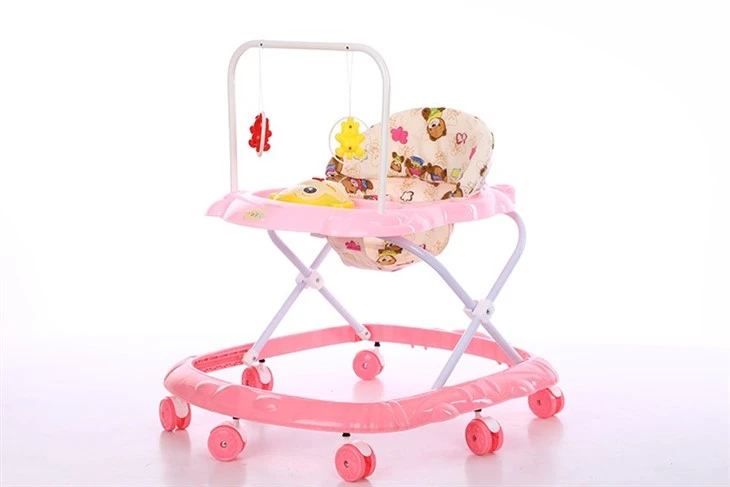
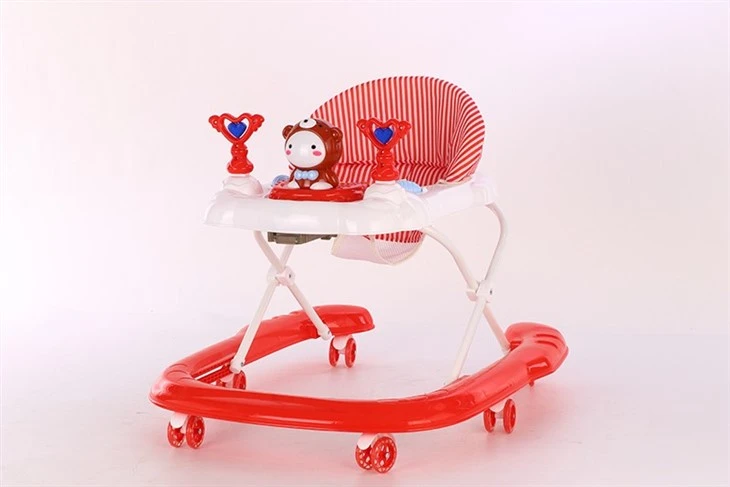
There are different types of braking systems available. Some walkers have a foot - operated brake, while others have a hand - operated brake. The braking system should be easy to use for both the child and the parents.
Soft Edges and Corners
To prevent injuries from bumps and bruises, a push toy walker should have soft edges and corners. Sharp edges can cause cuts or abrasions, especially when a child is moving around and may accidentally collide with the walker.
Soft padding on the edges and corners provides a cushioning effect. This is particularly important for children who are still learning to walk and may not have good spatial awareness.
Secure Handle Design
The handle of a push toy walker is the part that the child will hold onto while pushing. It should be designed to be comfortable and easy to grip. A handle with a non - slip surface is ideal as it reduces the risk of the child's hand slipping off the walker.
The handle should also be securely attached to the walker. It should be able to withstand the pulling and pushing forces exerted by the child without coming loose.
Age - Appropriate Features
Push toy walkers should be designed with age - appropriate features. For younger children, the walker may have simple, bright colors and basic shapes to attract their attention. As the child gets older, the walker can include more interactive features such as buttons that play music or lights that flash.
Age - appropriate features ensure that the child is engaged and challenged at the right level. This not only makes the toy more enjoyable but also promotes the child's development.
Safety Certification
As a supplier, I make sure that all our push toy walkers are certified to meet safety standards. Safety certifications, such as ASTM F963 in the United States and EN 71 in Europe, ensure that the product has been tested for various safety aspects, including mechanical and physical properties, flammability, and chemical content.
Parents can have peace of mind knowing that the push toy walker they purchase has been rigorously tested and meets the highest safety standards.
In conclusion, a push toy walker should have a combination of these safety features to ensure the well - being of the child. As a supplier, I am committed to providing high - quality, safe push toy walkers. If you are interested in Best Walker For 9 Month Old, Push And Sit Walker, or Walking Toys For 9 Month Old, we have a wide range of products that meet your needs.
If you are a retailer or a distributor looking to source push toy walkers, I invite you to contact me for more information. We can discuss your specific requirements, pricing, and order quantities. Let's work together to provide safe and fun toys for children.
References
- ASTM International. (2023). ASTM F963 - 23 Standard Consumer Safety Specification for Toy Safety.
- European Committee for Standardization. (2023). EN 71 - Safety of Toys.