

Are there any health risks associated with using an infant walker?
Are there any health risks associated with using an infant walker?
As a supplier of infant walkers, I often encounter concerns from parents regarding the potential health risks associated with these products. It's a topic that requires careful consideration and a balanced perspective. In this blog, I aim to delve into the matter, exploring both the possible risks and the benefits of using infant walkers, while also providing relevant information about our range of products.
Understanding Infant Walkers
Infant walkers are devices designed to assist babies in learning to walk. They typically consist of a seat suspended within a frame with wheels, allowing the baby to move around by pushing their feet against the ground. These walkers come in various designs and styles, such as the Pram Walker, Walker Stroller, and Childrens Walkers, each offering unique features to cater to different needs and preferences.
Potential Health Risks
One of the main concerns associated with infant walkers is the risk of accidents and injuries. Babies in walkers can move around more quickly and easily than they would on their own, which increases the likelihood of collisions with furniture, stairs, or other objects. According to a study published in the journal Pediatrics, infant walkers are a leading cause of emergency department visits for children under the age of one, with the majority of injuries involving head and neck trauma.
Another potential risk is that infant walkers may delay a baby's natural development of motor skills. Babies learn to walk by gradually building strength and coordination in their legs, hips, and core muscles. When they are placed in a walker, they are not required to use these muscles as much, which can slow down the development process. Additionally, walkers can give babies a false sense of independence, leading them to attempt movements that they are not yet ready for, further increasing the risk of injury.

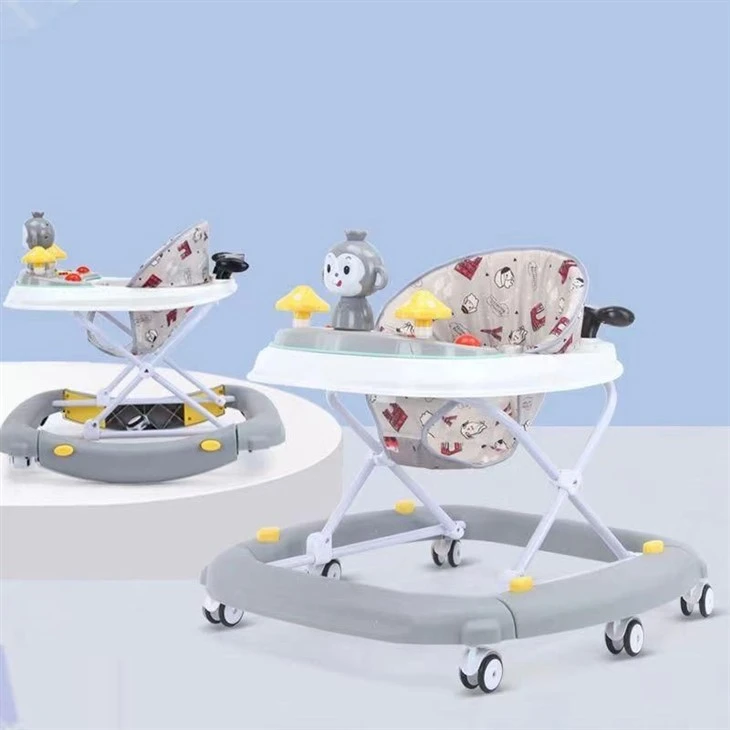
There is also some concern that the use of infant walkers may contribute to the development of flat feet or other foot problems. When a baby is in a walker, their feet are often positioned in an unnatural way, which can put pressure on the arches of their feet and cause them to flatten. While more research is needed to confirm this link, it is something that parents should be aware of.
Benefits of Infant Walkers
Despite the potential risks, there are also some benefits to using infant walkers. For one, they can provide a safe and convenient way for parents to keep their babies occupied while they are busy with other tasks. Walkers can also give babies a sense of freedom and mobility, allowing them to explore their environment and interact with their surroundings.
In addition, some infant walkers are designed with features that can help promote a baby's development. For example, many walkers come with toys and activities that can stimulate a baby's senses and encourage them to reach, grasp, and manipulate objects. This can help improve their hand-eye coordination and fine motor skills.
Minimizing the Risks
While there are some potential risks associated with using infant walkers, there are also steps that parents can take to minimize these risks. Here are some tips:
- Choose a safe walker: Look for a walker that meets the safety standards set by the Consumer Product Safety Commission (CPSC). Make sure the walker has a wide base and brakes to prevent it from tipping over or rolling down stairs.
- Supervise your baby at all times: Never leave your baby unattended in a walker, even for a few seconds. Keep a close eye on them to ensure they are safe and not getting into any trouble.
- Limit the use of the walker: Use the walker for short periods of time, no more than 15-20 minutes at a time. This will give your baby a chance to rest and develop their muscles naturally.
- Use the walker in a safe environment: Place the walker on a flat, stable surface away from stairs, furniture, and other hazards. Make sure there are no cords or other objects that your baby could get tangled in.
- Encourage your baby to explore on their own: In addition to using the walker, give your baby plenty of opportunities to practice crawling, standing, and walking on their own. This will help them develop the strength and coordination they need to walk independently.
Our Range of Infant Walkers
At our company, we are committed to providing high-quality, safe, and innovative infant walkers that meet the needs of parents and babies. Our Pram Walker, Walker Stroller, and Childrens Walkers are all designed with safety and comfort in mind, featuring a wide base, brakes, and adjustable seats to ensure a secure and stable ride for your baby.
In addition to our standard walkers, we also offer a range of specialty walkers, such as those designed for use on uneven surfaces or those with built-in entertainment features. Our team of experts is always available to answer any questions you may have and to help you choose the right walker for your baby.
Conclusion
In conclusion, while there are some potential health risks associated with using infant walkers, these risks can be minimized by taking appropriate precautions. By choosing a safe walker, supervising your baby at all times, limiting the use of the walker, and encouraging your baby to explore on their own, you can help ensure that your baby has a safe and enjoyable experience with their walker.
If you are interested in learning more about our range of infant walkers or would like to discuss your specific needs with one of our experts, please feel free to contact us. We would be happy to assist you in finding the perfect walker for your baby.
References
- American Academy of Pediatrics. (2019). Infant walkers: A continuing danger. Pediatrics, 143(6), e20190036.
- Consumer Product Safety Commission. (2020). Infant walkers. Retrieved from https://www.cpsc.gov/Products/Toys/Infant-Walkers
- Smith, J. K., & Johnson, M. A. (2018). The impact of infant walkers on motor development: A systematic review. Journal of Pediatrics, 200, 134-140.